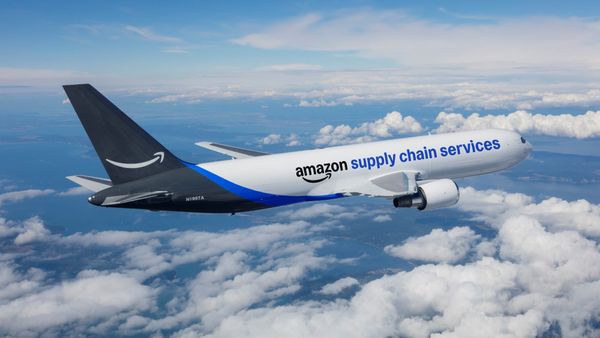
How Amazon Supply Chain Services (ASCS) Just Changed the Game
Amazon has dominated as an online selling platform for over two decades, with around 2 million seller accounts active worldwide in 2025. Fulfillment by Amazon (FBA) has been a powerful tool offering the most sophisticated logistics network ever built. However, there was a catch.
To truly benefit from Amazon’s shipping and fulfillment capabilities, businesses usually had to operate inside Amazon’s ecosystem. They had to become Amazon sellers, use Fulfillment by Amazon (FBA), and structure their operations around the marketplace itself.
That is no longer true, and companies of all industries should be paying attention to this major shift!
With the launch of Amazon Supply Chain Services (ASCS), Amazon is no longer simply offering fulfillment tools for marketplace sellers. It is turning its logistics infrastructure into a standalone platform that businesses can use regardless of where they sell.
This is a major turning point for modern commerce infrastructure, but most companies still don’t understand the implications.
Before ASCS: Access Was Conditional
Before Amazon Supply Chain Services, access to Amazon’s logistics machine was fragmented and tightly tied to the Amazon marketplace.
Companies could use:
- FBA for fulfillment,
- Amazon warehousing,
- inbound freight services,
- Buy With Prime,
- and various seller tools.
But these services were fundamentally designed to support Amazon commerce first.
If you wanted the benefits of Amazon’s logistics infrastructure, you generally needed to:
- sell on Amazon,
- operate within Amazon’s seller ecosystem,
- or structure your business around Amazon-native workflows.
This created a massive advantage for early Amazon-native brands.
They gained:
- faster delivery,
- lower fulfillment costs,
- higher conversion rates,
- national distribution reach,
- and infrastructure that smaller competitors simply could not replicate.
Millions of businesses were effectively running on top of Amazon’s logistics operating system long before most people realized it existed.
But again, it was still fundamentally tied to Amazon’s marketplace.
What Changed With Amazon Supply Chain Services
Amazon Supply Chain Services changes the model entirely. Now, businesses can use Amazon’s logistics infrastructure without needing to be Amazon-first sellers. That sounds simple on the surface, but strategically it is enormous.
Amazon is effectively unbundling its logistics infrastructure from its marketplace.
In practical terms, this means businesses can now use Amazon for:
- freight transportation,
- warehousing,
- inventory distribution,
- fulfillment,
- last-mile delivery,
- and supply chain orchestration,
even if they primarily sell through:
- Shopify,
- wholesale,
- retail stores,
- direct-to-consumer websites,
- enterprise procurement channels,
- or other marketplaces.
This is the difference between “Amazon fulfillment for Amazon sellers” and “Amazon logistics as global infrastructure.”
The AWS Parallel Is Real
The closest historical analogy is AWS. Originally, Amazon built AWS because it needed internal computing infrastructure to run its own business. Eventually, Amazon realized that the infrastructure itself had value beyond Amazon’s own operations.
So it externalized it, and that single decision reshaped the technology industry.
Before AWS:
- companies had to build or lease expensive computing infrastructure,
- scaling software companies was capital-intensive,
- and only larger organizations could afford robust cloud operations.
After AWS:
- infrastructure became programmable,
- startups gained capabilities previously reserved for enterprises,
- and an entire ecosystem of consultants, integrators, SaaS companies, and managed service providers emerged.
Amazon Supply Chain Services represents the same kind of transition for physical commerce.
Amazon spent decades building:
- warehouses,
- robotics systems,
- freight operations,
- inventory forecasting,
- delivery infrastructure,
- optimization software,
- and transportation networks
to serve itself.
Now it is exposing that infrastructure to everyone else.
The Real Shift: Capability Democratization
The most important consequence of ASCS is capability democratization.
Historically, only companies with massive scale could operate sophisticated supply chains.
Now smaller businesses can increasingly access:
- distributed inventory positioning,
- fast national fulfillment,
- advanced routing,
- integrated freight management,
- and multi-channel logistics coordination
through a platform instead of through massive capital investment, and sloppy, convoluted systems.
This will have dramatic changes in the competitive landscape.
A lean startup can now operate with logistics sophistication that previously required:
- enterprise contracts,
- dedicated operations teams,
- large warehouse footprints,
- and years of infrastructure investment.
Which means the barriers to operational excellence are collapsing.
Why This Creates a New Services Economy
Whenever infrastructure becomes standardized, a new layer of opportunity emerges above it.
AWS created:
- cloud consultancies,
- DevOps agencies,
- migration firms,
- managed cloud providers,
- cybersecurity specialists,
- and SaaS ecosystems.
ASCS will likely create:
- supply chain migration consultancies,
- Amazon logistics integrators,
- inventory optimization firms,
- AI-driven procurement systems,
- ERP integration providers,
- operational analytics platforms,
- and industry-specific logistics orchestrators.
The infrastructure layer becomes commoditized.
The value moves upward into:
- implementation,
- optimization,
- orchestration,
- automation,
- data,
- and workflow design.
This is where many of the next major commerce-service businesses will likely emerge.
Amazon Is No Longer Just Competing With Retailers
This is another reason the launch matters.
Amazon is no longer simply competing with:
- retailers,
- ecommerce marketplaces,
- or DTC brands.
It is now competing directly with:
- global freight operators,
- third-party logistics providers,
- supply chain software companies,
- warehousing networks,
- and transportation infrastructure providers.
The competitive set changes completely.
Amazon is moving from “the company that ships products” to “the company that provides logistics infrastructure.” The companies they were once competing with they are now supporting.
The Long-Term Implication
The internet abstracted information distribution. Cloud computing abstracted computing infrastructure. Amazon Supply Chain Services may help abstract physical commerce infrastructure itself.
If that happens, the winners over the next decade may not necessarily be the companies that own the most warehouses or trucks. They may be the companies that best orchestrate the infrastructure layer Amazon is making available.
And just like the early AWS era, most people are probably underestimating how large that shift could become.