Amazon Supply Chain Services: How to Get Started
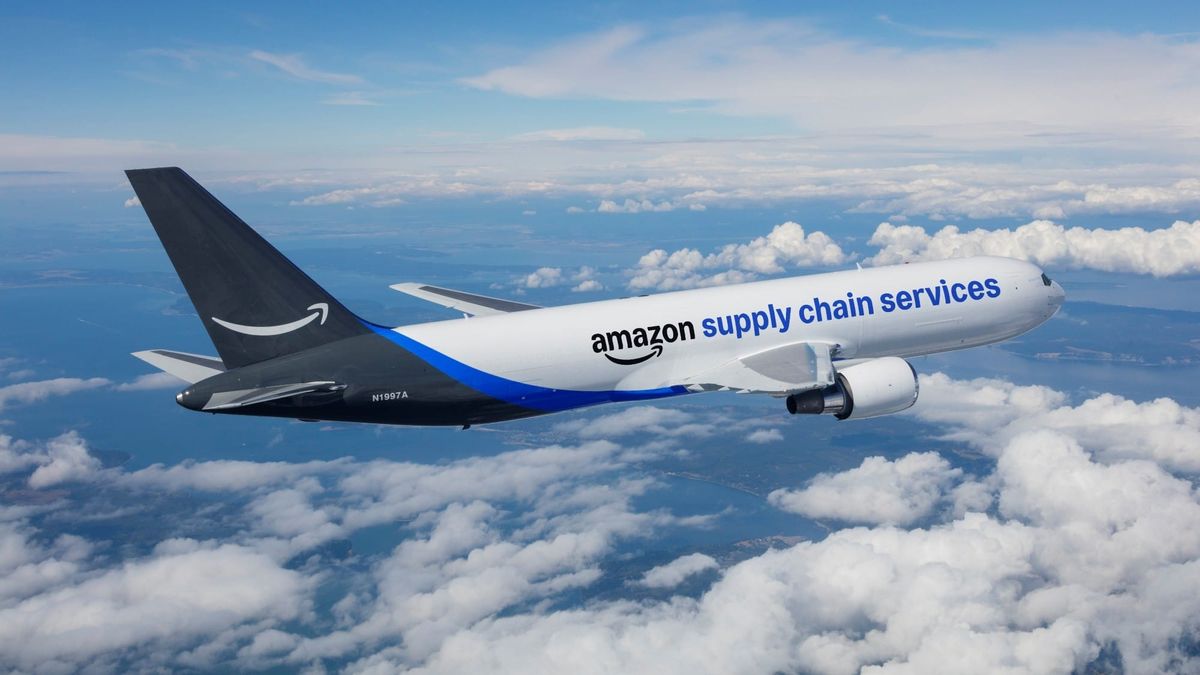
Amazon Supply Chain Services allows businesses to use Amazon’s logistics infrastructure for freight movement, warehousing, inventory storage, fulfillment, and shipping.
At a practical level, ASCS gives companies the ability to:
- Move products from manufacturers into Amazon’s network
- Store reserve inventory inside Amazon Warehousing and Distribution (AWD)
- Automatically replenish fulfillment centers
- Fulfill orders from Shopify, Amazon, Walmart, and other channels
- Use Amazon’s shipping and delivery infrastructure
For most businesses, the real value is operational consolidation. Instead of coordinating disconnected freight providers, warehouses, and fulfillment systems manually, ASCS centralizes more of the supply chain inside one platform.
This guide focuses on how to actually set up and use the system.
Creating an Amazon Supply Chain Account
Amazon Supply Chain Services, commonly shortened to ASCS, is a collection of connected logistics and fulfillment products that allow businesses to move, store, distribute, and deliver products using Amazon’s infrastructure.
Many people assume these services are only relevant to Amazon marketplace sellers, but the broader vision is significantly larger than that. Amazon increasingly wants businesses to use its logistics network regardless of where they sell.
A company operating a Shopify storefront can use Amazon’s fulfillment infrastructure. A brand importing products from overseas can move freight through Amazon’s network before routing inventory into storage and fulfillment systems. Businesses selling across Walmart, TikTok Shop, retail stores, and direct-to-consumer websites can centralize parts of their logistics operation through Amazon.
Instead of acting purely as a marketplace, Amazon is positioning itself as a logistics utility layer for commerce.
Setting Up the Core Components of ASCS
Amazon Supply Chain Services is not a single product. It is a connected ecosystem of services that work together across different stages of the supply chain.
Setting Up Amazon Global Logistics
Amazon Global Logistics is used for moving inventory from manufacturers into Amazon’s network.
After onboarding, businesses can create inbound freight shipments directly inside the ASCS dashboard. Amazon coordinates transportation methods including ocean freight and air freight while also handling portions of customs coordination and inbound routing.
Most companies using AGL begin by:
- Entering supplier pickup information
- Creating shipment documentation
- Selecting freight methods
- Routing inventory into AWD or fulfillment centers
The largest advantage is visibility. Businesses can track freight movement, warehouse routing, and inbound inventory status inside a single operational environment rather than coordinating updates across multiple vendors.
Configuring Amazon Warehousing and Distribution (AWD)
AWD is designed for reserve inventory storage.
Instead of sending all inventory directly into fulfillment centers, businesses can store larger quantities inside AWD while Amazon automatically replenishes downstream fulfillment nodes as demand changes.
The setup process generally involves:
- Creating inbound inventory shipments
- Assigning SKUs to AWD storage
- Configuring replenishment preferences
- Monitoring inventory allocation recommendations
Once inventory enters AWD, Amazon’s system begins analyzing demand patterns and inventory placement.
For businesses managing multiple sales channels, AWD often becomes the central inventory reservoir feeding fulfillment operations automatically.
This reduces the amount of manual forecasting and warehouse coordination businesses need to perform themselves.
Using Fulfillment by Amazon (FBA)
FBA handles order fulfillment once inventory is positioned inside Amazon’s fulfillment centers.
Businesses send inventory into Amazon facilities, and Amazon manages:
- Picking and packing
- Shipping
- Customer delivery
- Returns handling
- Portions of customer support
Inside ASCS, FBA increasingly works alongside AWD.
Rather than manually monitoring inventory across fulfillment centers, businesses can allow Amazon to replenish fulfillment inventory from AWD automatically.
For most growing ecommerce brands, this creates a much more stable operational workflow than managing replenishment manually.
Configuring Multi-Channel Fulfillment (MCF)
Multi-Channel Fulfillment allows Amazon to ship orders originating outside Amazon’s marketplace.
This is one of the most useful features for Shopify brands and multi-channel sellers.
Businesses can connect ecommerce platforms directly to Amazon’s fulfillment infrastructure so that orders placed on external channels are fulfilled automatically through Amazon.
Typical setup involves:
- Connecting Shopify or another ecommerce platform
- Syncing inventory visibility
- Mapping SKUs correctly
- Configuring shipping preferences
- Routing external orders into Amazon fulfillment
Once configured, orders placed through connected storefronts flow directly into Amazon’s operational network.
For businesses without internal warehouse operations, this can dramatically simplify scaling.
Using Amazon Shipping
Amazon Shipping allows businesses to use Amazon’s delivery infrastructure more directly.
Depending on eligibility and region, businesses can use Amazon for parcel delivery and returns support.
This is particularly useful for companies already operating heavily inside Amazon’s ecosystem because shipping operations become more centralized.
Businesses using Amazon Shipping should pay close attention to delivery zones, rates, pickup availability, and operational requirements since service availability can vary by market.
How ASCS Works Operationally
A typical ASCS workflow looks like this:
Products are manufactured domestically or internationally and moved into Amazon’s network through Amazon Global Logistics or another inbound freight method. Inventory enters AWD or fulfillment centers depending on the business’s configuration.
Once inventory is inside the network, Amazon distributes inventory closer to customers based on projected demand and fulfillment activity. Orders arriving from Amazon, Shopify, Walmart, or other connected channels are then fulfilled through Amazon’s operational infrastructure.
The overall goal is reducing fragmentation between freight movement, inventory storage, fulfillment, and delivery.
Getting Started With Amazon Supply Chain Services
Businesses can register through Amazon’s official supply chain portal. During setup, Amazon will ask for:
- Legal business information
- Billing details
- Tax information
- Primary operational contacts
- Business shipping details
After registration, businesses gain access to the ASCS dashboard where inventory, inbound shipments, warehousing, and fulfillment operations are managed.
Official setup portal:
https://supplychain.amazon.com/get-started
Before configuring anything inside the system, it helps to decide which part of your operation Amazon will manage first. Most businesses begin with one operational layer instead of migrating their entire logistics operation immediately.
The most common starting points are:
- International freight through Amazon Global Logistics
- Bulk inventory storage through AWD
- Ecommerce fulfillment through FBA or Multi-Channel Fulfillment
- Shipping support through Amazon Shipping
The correct entry point depends on where operational friction currently exists in your business.
A company struggling with freight coordination should start with inbound logistics. A business overwhelmed by order fulfillment should begin with Multi-Channel Fulfillment. A fast-growing ecommerce brand experiencing stockouts may benefit most from AWD and automated replenishment.
The platform works best when implemented incrementally.
Where ASCS Is Most Powerful
ASCS is especially effective for businesses experiencing operational strain caused by growth.
Many ecommerce companies discover that customer acquisition scales faster than fulfillment operations. Shipping delays increase, inventory management becomes unstable, and logistics coordination begins consuming management attention that was previously focused on growth.
Amazon’s infrastructure can relieve some of that pressure.
Multi-channel sellers are particularly strong candidates because inventory fragmentation becomes increasingly difficult as sales channels multiply. Businesses selling simultaneously through Amazon, Shopify, Walmart, retail stores, and emerging marketplaces often struggle to maintain unified inventory visibility.
Import-heavy businesses also benefit substantially from freight consolidation and integrated warehousing.
At the same time, companies competing heavily on delivery speed may find Amazon’s network especially compelling because faster fulfillment frequently improves conversion rates, customer satisfaction, and repeat purchasing behavior.
The Tradeoffs Businesses Should Understand
Despite the advantages, Amazon Supply Chain Services introduces meaningful strategic considerations.
The most obvious is dependence.
A company relying on Amazon for freight movement, warehousing, fulfillment, and shipping becomes increasingly tied to Amazon’s operational ecosystem. That relationship may work extremely well operationally while simultaneously reducing flexibility over time.
Businesses should also recognize that Amazon controls pricing structures and platform rules. Storage costs, fulfillment fees, and operational requirements can evolve.
Another challenge involves operational preparation before inventory even enters Amazon’s network. Many businesses still require manufacturers, prep centers, or third-party partners to handle labeling, packaging, and compliance processes correctly.
Strong logistics infrastructure does not eliminate the need for disciplined forecasting, inventory planning, and purchasing decisions.
Execution improves, but planning still matters enormously.
The Bigger Strategic Picture
Amazon Supply Chain Services represents a larger transformation in commerce infrastructure.
For decades, operational scale created defensive moats around large companies. Smaller businesses often lost because they could not move products as efficiently or fulfill orders as quickly.
ASCS weakens part of that advantage.
When infrastructure becomes accessible as a service, the constraints on smaller businesses begin changing. Companies can focus more aggressively on branding, product development, customer acquisition, and niche specialization while relying on external infrastructure for operational scale.
That does not mean logistics suddenly becomes easy. It means the barriers to accessing high-level logistics capabilities become lower.
Just as AWS created entirely new categories of software companies, cloud consultancies, and infrastructure businesses, Amazon Supply Chain Services may create new ecosystems around commerce operations.
There will likely be:
- ASCS-focused agencies
- Supply chain optimization consultancies
- Multi-channel logistics operators
- Inventory automation businesses
- Specialized ecommerce infrastructure firms
The businesses that understand these systems early may gain disproportionate operational leverage over competitors still operating fragmented logistics stacks.
Final Thoughts
Amazon Supply Chain Services is one of the clearest examples of Amazon transforming internal operational capability into external infrastructure.
The company spent decades building one of the most advanced logistics systems in the world because its retail empire required it. Now that infrastructure is becoming commercially accessible to businesses far smaller than Amazon itself.
For ecommerce brands, wholesalers, importers, and multi-channel sellers, the implications are significant.
Businesses that previously lacked the resources to build sophisticated logistics operations can increasingly access global freight coordination, warehousing, fulfillment, and delivery systems through a unified platform.
That shift has the potential to reshape how physical-product companies scale over the next decade.
The companies that recognize this transition early will likely build differently from those that do not.
They will treat logistics less as an internal fixed asset and more as programmable infrastructure.
And that changes the economics of growth.
Additional Resources
- Amazon Supply Chain Services Official Site
- ASCS Get Started Portal
- Amazon Supply Chain Services Announcement
Sources and reporting used for this article include Amazon announcements, industry reporting, and community seller discussions. (aboutamazon.com)